How Summer Camp Helps Kids Push Past Their Fears
Every parent knows the standoff, when a child insists he can do something, then plants his feet and refuses to try. At an overnight camp, those moments happen far from home, which makes them both harder and more valuable. A recent evening at North Star Camp for Boys in the Wisconsin Northwoods offered a good example, and it started at the edge of Spider Lake with one camper and a swim test he had been avoiding for days.
One Camper, One Swim Test
Tonight during Organized Free, I walked down to Swim Point with one of our younger campers. Since the first day of camp, he had refused to finish his swim test because, in his words, “the water is too cold.” He was never claiming he couldn’t swim, quite the opposite. He made it very clear to anyone who would listen that he knew he could pass the test, but he just wasn’t getting in the water.
Over the last week we had a series of conversations, some more productive than others. There was plenty of negotiating involved, which I’m sure his parents would recognize immediately. Tonight, on the hottest day of summer so far, we headed down to the waterfront together. He took a deep breath, lowered himself into Spider Lake, and finished the swim test.
When he finished, he wanted to take a celebratory trip to the water trampoline and announced that he was signing up for waterskiing next week. Afterward we talked for a few minutes about what had transpired. The water hadn’t gotten warmer and he hadn’t suddenly become a better swimmer between last week and tonight, but he had finally decided to push through the thing that was holding him up. Everyone down at Swim Point was proud of him, and he was pretty visibly proud of himself.
Why Peer Encouragement Matters So Much
What made the moment possible was not just persistence from the adults. When we got there, some of his cabinmates were there waiting to cheer him on. A few of the older boys helped encourage him through his final nerves, and a few more in the water wanted to swim and tread alongside him so he would not be alone.
This is one of the quiet strengths of a boys summer camp: a lot of what campers learn comes from each other as much as from the counselors. A younger camper watching an older one, or feeling a friend paddling next to him, often finds the encouragement he needs when the adult version isn’t quite landing. Living together in a cabin for weeks at a time builds that kind of trust, and it turns moments like this one at Swim Point into something the whole cabin ends up cheering for.
A Camp Full of Spirit
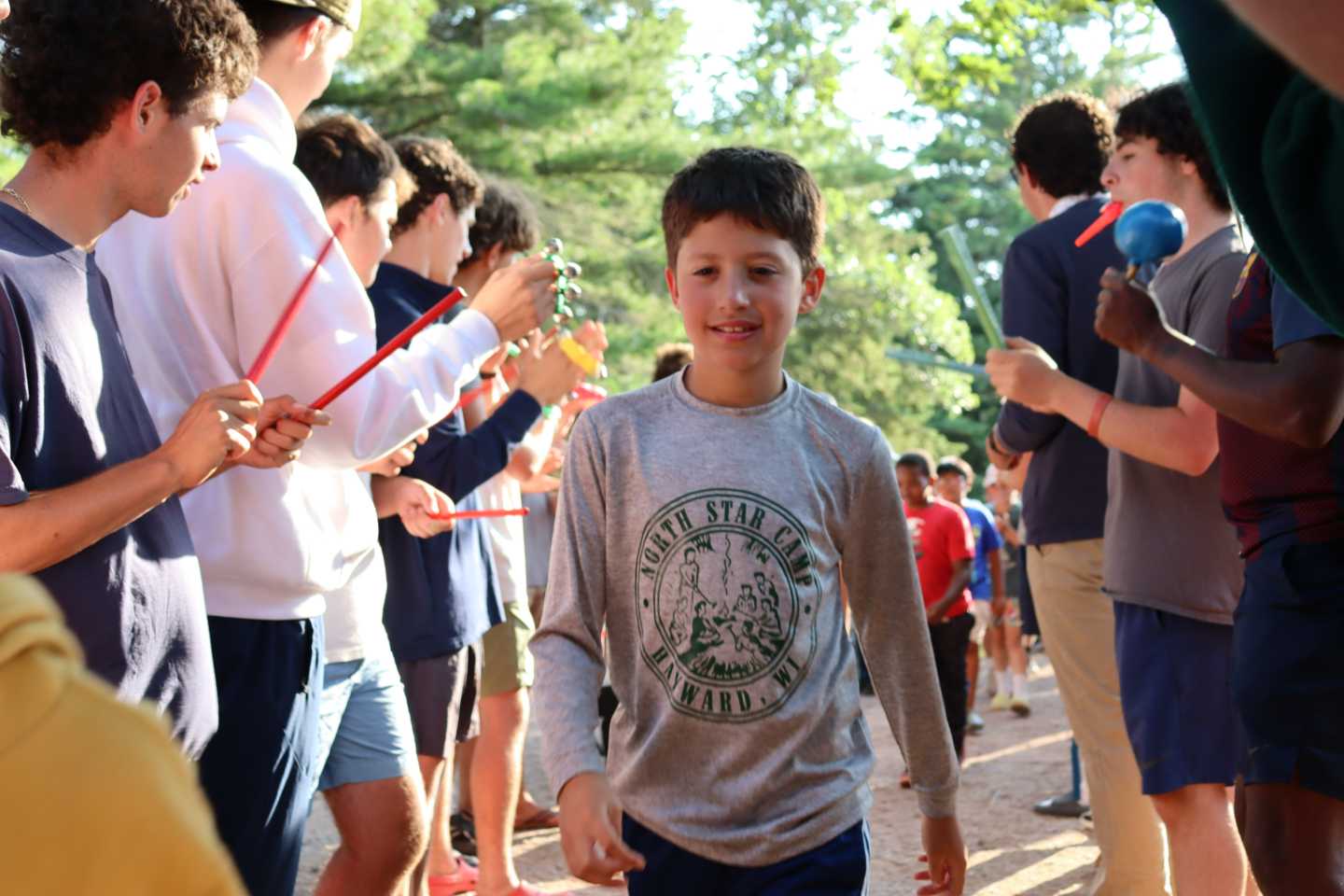
The rest of camp was buzzing with energy as well. Dinner tonight may have been one of the loudest of the summer. The Junior Village came ready to cheer and quickly decided they wanted more than just to be heard. They marched into the Seniors’ traditional cheering spot in the middle of the Outer Lodge and claimed it as their own. The Senior Village responded with their customary conga line to reclaim their territory, but as they then cheered next to one another, I’m still not sure who won the volume contest. Once everyone finally settled down, the Intermediate Village decided it was their turn and started dancing. The Lodge was absolutely alive.
A little friendly rivalry, a lot of noise, and a room full of kids who feel completely at home is a fair summary of the Lodge on a good night, and the same sense of belonging is a big part of what lets a nervous camper try something hard the way that camper did at Swim Point earlier in the evening.
Quieter Moments of Gratitude
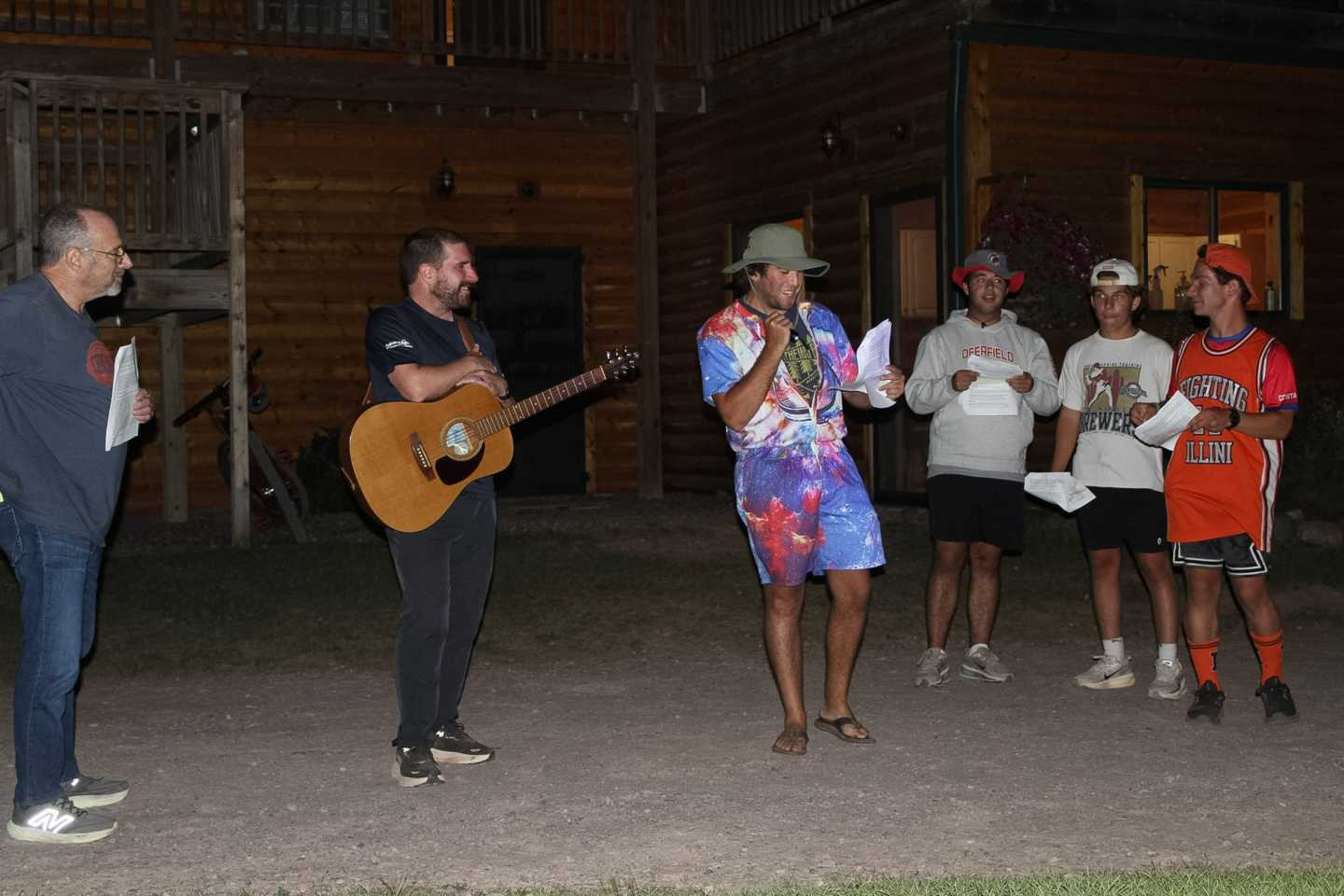
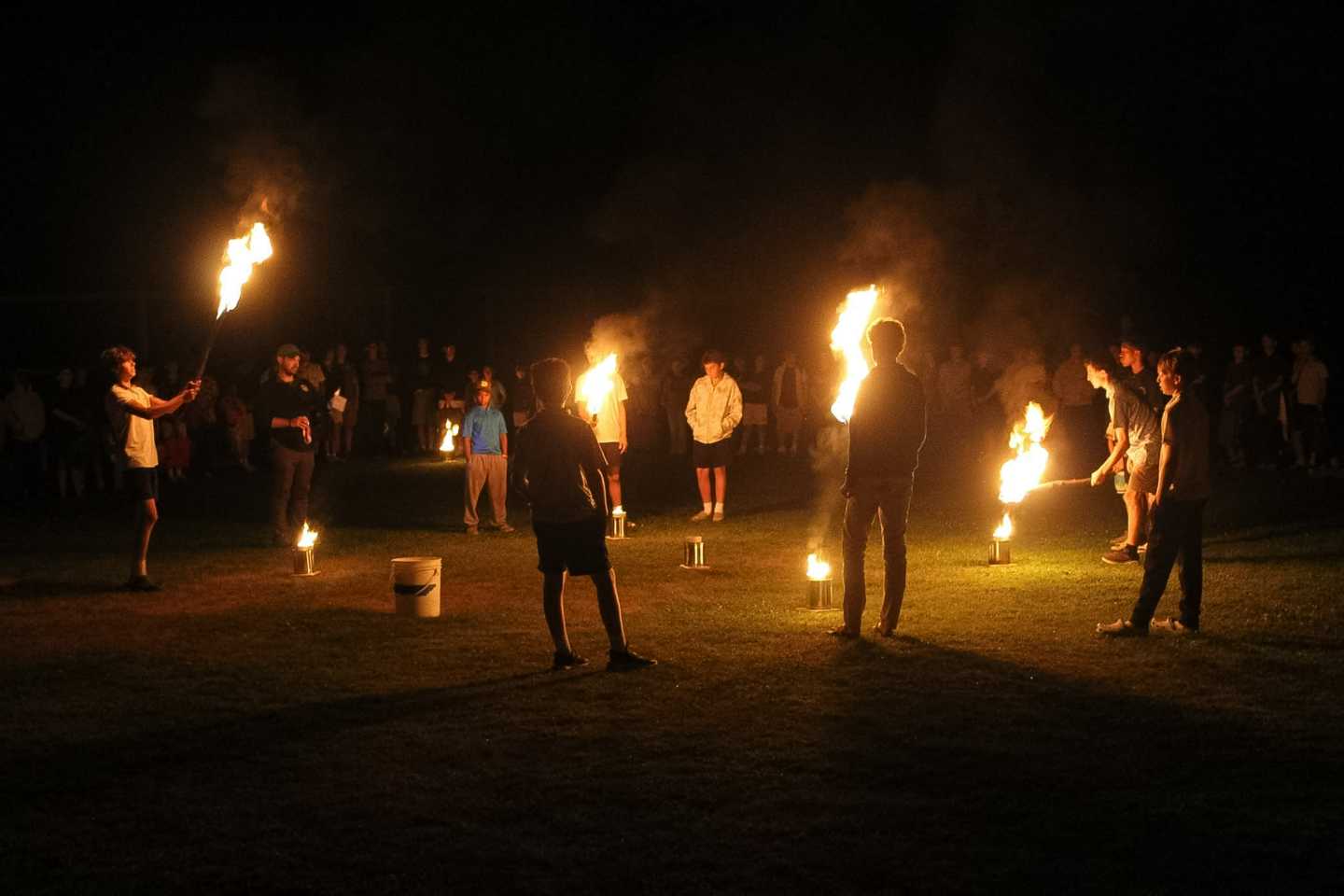
Not every evening is loud. Yesterday evening gave us a quieter opportunity to reflect. After Unorganized Free, each cabin gathered for Sunday Night Campfires. We continued the conversation from Friday Night Service by focusing on gratitude. The counselors led discussions about appreciating the people around us, recognizing the opportunities we have each day, and taking time to notice the things that are easy to overlook. A good overnight camp works to balance the big, noisy fun with time to slow down and reflect, and having both in a single weekend is part of why the summer ends up feeling as full as it does.
What Comes Next: The Big Traditions
Looking ahead, camp is quickly shifting into one of the busiest stretches of the summer. We officially kicked off United Nations Day week with the announcement of this year’s captains. Preparations are already underway as teams begin writing cheers, planning strategies, and building excitement. This weekend will be a busy one with our Fourth of July celebration on Saturday followed immediately by one of our favorite traditions, United Nations Day, on Sunday.
Before we get there, tomorrow is Cruiser Day. Campers will sleep in a little, spend the day with their cabins, cook dinner over campfires, and enjoy a full day of the special activities that have made Cruiser Day one of the highlights of every week at North Star.
See It for Yourself
A cold swim test, a wall of cheering friends, and a proud kid climbing out of Spider Lake give a truer picture of a Wisconsin boys summer camp than any brochure line ever will. If you want to see how an overnight camp helps children build confidence and courage, take a look at our activities and traditions, or reach out to schedule a tour. We would love to introduce you to the community that makes moments like these possible.
“A truth that’s told with bad intent, beats all the lies you can invent.” — William Blake
FAQ
What is a swim test at summer camp?
A swim test is a short assessment of a camper’s swimming ability at Swim Point, used to keep everyone safe and to match kids with appropriate waterfront activities. Passing it often opens the door to activities like waterskiing and deep-water play.
How does camp help a shy or nervous child?
Living alongside cabinmates and supportive counselors gives kids steady encouragement and safe chances to try hard things. Peer support, in particular, often helps a hesitant camper find the courage to push past a fear.
What is United Nations Day at North Star Camp?
United Nations Day is a signature camp tradition built around friendly, camp-wide competition and ceremony. Teams and captains are announced in advance, and the whole camp takes part.